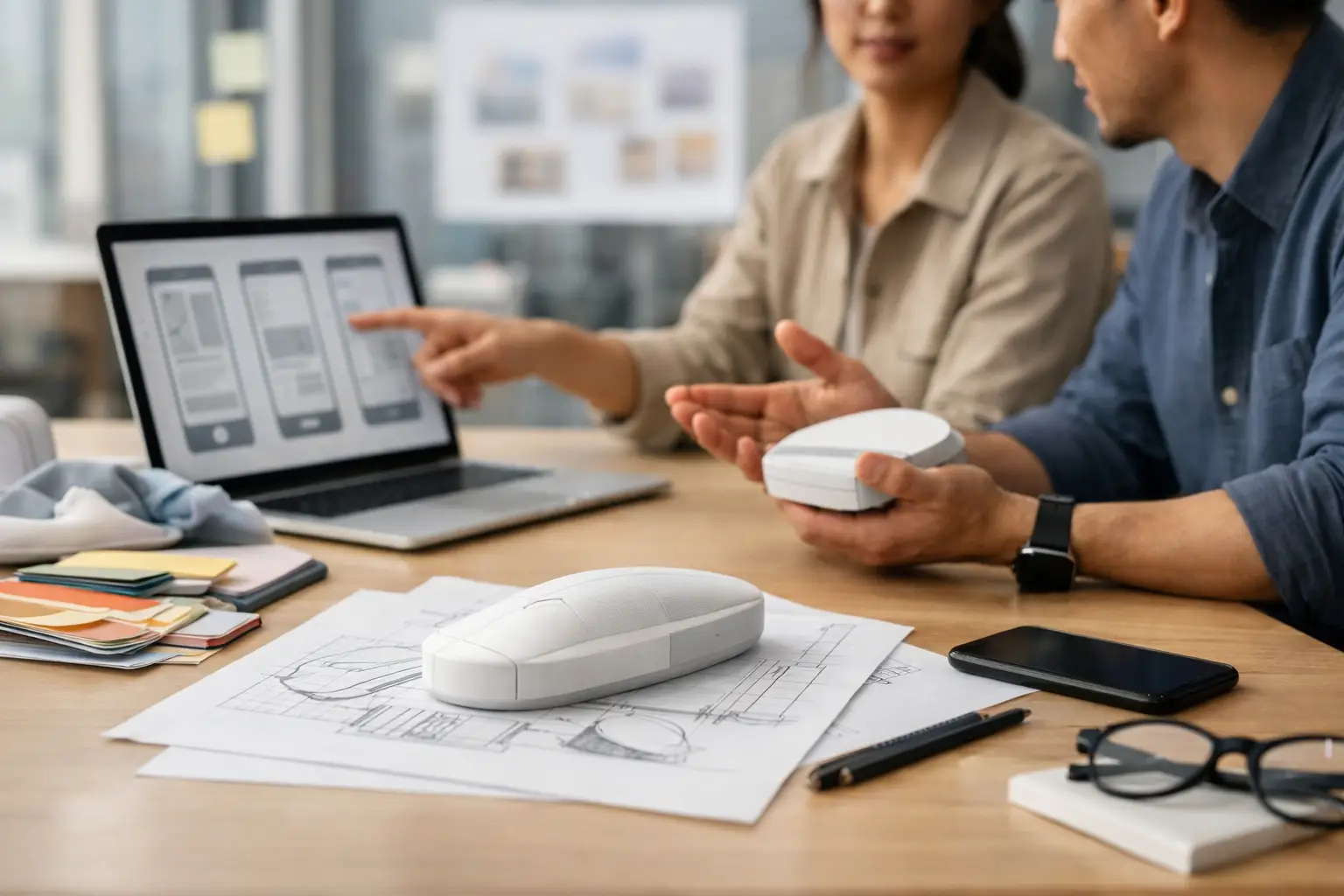
A product stalls when strategy lives in one deck, design sits in another file, and development starts without either being fully aligned. That gap is exactly why founders and product teams ask, what is end to end product design? They are not asking for a buzzword. They want a faster path from idea to launch, with fewer handoff errors, fewer missed requirements, and a product that actually performs once it goes live.
What is end to end product design?
End to end product design is the process of taking a digital product from the earliest stage of definition through design, validation, build readiness, launch, and ongoing refinement. It covers more than screens. It includes the business goal, the user problem, the user journey, the interface, the technical realities, and the launch strategy.
In practice, that means product design is not treated as a decorative phase that happens before development. It becomes a connected system. Research informs structure. Structure informs flows. Flows inform interface decisions. Interface decisions account for engineering effort, content, analytics, and conversion goals. Every stage affects the next.
For ambitious brands, that matters because speed alone is not enough. Launching fast with poor logic, weak UX, or fragmented execution usually creates expensive rework later. End to end product design reduces that risk by keeping the product aligned from concept to release.
Why businesses ask for end to end product design
Most teams do not start by saying they need end to end product design. They say they need a better app, a sharper website, a cleaner checkout flow, or an MVP ready for market. The real issue is often fragmentation.
One partner handles branding. Another designs the interface. A separate team builds the backend. Someone else manages launch. On paper, that looks specialized. In reality, it often creates delays, conflicting priorities, and vague accountability.
End to end product design solves that by treating the product as one business system rather than a chain of disconnected tasks. The product is designed with launch in mind from day one. Decisions are made not only for aesthetics, but also for usability, scalability, implementation speed, and performance.
That approach is especially valuable for startups, growing companies, and brands under pressure to move quickly. If you are validating a concept, shipping an MVP, or rebuilding a core digital experience, you need momentum without losing quality.
What end to end product design usually includes
The exact scope depends on the product, but most end to end engagements move through a clear sequence.
Product strategy and discovery
This is where the product gets defined before anyone starts polishing screens. The team looks at the business model, target users, competitive space, feature priorities, technical constraints, and success metrics.
This stage matters because many product problems are not design problems at all. They are definition problems. If the audience is unclear or the product goal is too broad, the final experience will feel unfocused no matter how clean the interface looks.
User experience design
Once the product direction is set, UX design maps how people will move through it. This includes information architecture, user flows, wireframes, and interaction logic.
Good UX work removes friction before visual design begins. It helps answer practical questions. What should happen after signup? How many steps should checkout take? Which actions belong on mobile first? Where do users drop off, and why?
User interface design
UI design turns the product structure into a polished visual experience. This includes layout, typography, color, spacing, components, states, and brand consistency.
At this point, quality matters in a very visible way. A strong interface builds trust fast. For customer-facing products, that trust affects conversion, retention, and perceived value. Premium products rarely win on looks alone, but weak visual execution can absolutely hurt adoption.
Prototyping and validation
Before build starts, teams often test assumptions through clickable prototypes, lightweight user feedback, or internal workflow reviews. This stage is where smart teams catch confusion early.
Not every product needs extensive formal research. A startup MVP may need rapid directional validation, while a larger platform redesign may require deeper testing. That is one of the trade-offs in end to end product design. The process should match the business context, not follow a rigid ritual.
Design for development
This is where many projects break down if the process is not truly end to end. Screens are one thing. Build-ready design is another.
A strong handoff includes component systems, responsive behavior, design specifications, edge cases, and clear logic for developers. It also reflects technical realities. If a feature adds cost, complexity, or performance issues, that should be discussed before launch timelines are committed.
Launch and optimization
End to end product design does not stop when files are approved. The product still needs to be released, monitored, and improved.
That can include QA, implementation support, analytics planning, iteration after launch, and ongoing design updates based on real behavior. Products rarely get everything right in version one. The advantage of an end to end model is that the same strategic thread continues after release.
What makes it different from standard product design?
The short answer is ownership.
Standard product design can sometimes refer only to the UX and UI portion of a project. End to end product design goes further. It connects business thinking, user needs, visual design, technical feasibility, and launch execution under one process.
That difference is not just semantic. It changes outcomes. When teams own the full path, they make better trade-offs. They know when to simplify for speed, when to invest in deeper flows, and when a polished interface is not enough without backend logic or post-launch support.
It also reduces the common problem of beautiful concepts that fall apart during development. A product that is impressive in a presentation but difficult to ship is not a strong product. It is an expensive draft.
The biggest benefits of end to end product design
The clearest benefit is alignment. Everyone works from the same product logic, which cuts down on duplicated effort and mixed signals.
Speed is another major advantage, but only when the process is managed well. Because strategy, design, and implementation are considered together, teams can make decisions faster and avoid long revision cycles caused by late-stage surprises.
Quality improves too. Not because one approach magically guarantees better design, but because decisions are made in context. The product is shaped around user experience, business goals, and technical execution at the same time.
There is also a leadership benefit. Founders and stakeholders spend less time coordinating multiple specialists and resolving preventable gaps between teams. That makes execution more efficient, especially when launch windows are tight.
Where end to end product design can go wrong
Not every project labeled end to end is actually integrated. Sometimes it is just a broader sales phrase for a standard design package.
A real end to end process should show continuity between stages. Discovery should influence UX. UX should influence UI. UI should reflect engineering realities. Launch should connect back to the original goals.
Another issue is overbuilding. Some teams hear end to end and assume they need a full enterprise-grade process from day one. That is not always true. An early-stage founder may need a focused MVP with a lean scope, fast validation, and just enough infrastructure to support growth. A larger business may need a deeper system with more documentation and testing. The right model depends on the product, the timeline, and the stakes.
Who should invest in it?
If you are building a digital product that needs to launch fast and scale cleanly, end to end product design is usually worth considering. It is especially useful when the product has revenue impact, operational complexity, or multiple user touchpoints.
That includes SaaS platforms, mobile apps, customer portals, internal business tools, high-converting marketing sites, and commerce experiences with custom flows. In those environments, fragmented execution gets expensive quickly.
This is also why agencies such as PixoryFlow position end to end execution as a core advantage. When the same partner can shape the product, prepare it for development, support launch, and refine it after release, the path to market gets shorter and far more controlled.
What to look for in an end to end product design partner
Look for strategic thinking first, not just attractive mockups. A strong partner should be able to connect design choices to business outcomes, user behavior, and technical constraints.
You should also look for signs of build awareness. If a team cannot explain how design decisions affect scope, performance, or implementation speed, the process is not truly end to end.
Finally, pay attention to how they talk about launch. If the engagement appears to stop at design approval, you may still be left managing critical gaps yourself.
The best end to end product design work feels controlled from the outside because the complexity is being handled inside the process. That is the point. You are not paying for more steps. You are paying for fewer blind spots.
If your product matters to growth, design should not stop at the interface. It should carry the idea all the way to something people can use, trust, and come back to.